✓ Choosing the right cut and thickness is paramount for perfect results.
✓ Proper seasoning and bringing steak to room temperature are crucial initial steps.
✓ High heat searing creates an irresistible crust and flavor.
✓ Resting the steak after cooking allows juices to redistribute, ensuring tenderness.
How It Works
1
Select Your Steak
Choose a high-quality cut like ribeye, New York strip, or tenderloin. Aim for a thickness of at least 1.5 inches for optimal cooking control.
2
Prepare & Season
Pat the steak dry thoroughly with paper towels and season generously with coarse salt and freshly ground black pepper. Allow it to come to room temperature for 30-60 minutes.
3
Sear & Cook
Heat a heavy-bottomed pan (cast iron is ideal) over high heat until smoking. Add oil, then sear the steak for 2-3 minutes per side. Finish in the oven or continue pan-frying to desired doneness.
4
Rest & Serve
Transfer the cooked steak to a cutting board and let it rest for 5-10 minutes. This essential step ensures the juices redistribute, making the steak tender and flavorful.
Choosing the Best Steak Cuts for Home Cooking
Photo: Lukas Blazek / Pexels
The journey to mastering how to cook perfect steak at home begins with the right foundation: selecting the ideal cut. Not all steaks are created equal, and understanding their characteristics is key to achieving your desired culinary outcome. For a truly luxurious experience, consider a Ribeye. Known for its rich marbling, which melts during cooking, the ribeye delivers unparalleled flavor and tenderness. Its generous fat content makes it forgiving for beginners and excellent for high-heat searing. Another fantastic option is the New York Strip, often praised for its balanced flavor and firm, chewy texture. It has a good amount of marbling around the edges, contributing to its juiciness without being overly fatty. For those who prioritize tenderness above all else, the Filet Mignon (Tenderloin) is the undisputed champion. This cut is incredibly lean and buttery soft, though it offers a milder flavor profile compared to fattier cuts. It benefits greatly from a good sear to develop a flavorful crust. Sirloin, particularly Top Sirloin, offers a more economical yet still delicious choice. It's leaner than ribeye or strip but still flavorful, making it versatile for various cooking methods. When selecting your steak, always look for good marbling – the small flecks of white fat distributed throughout the muscle. This intramuscular fat is what renders down during cooking, basting the meat from within and contributing significantly to both flavor and moisture. A vibrant red color indicates freshness, and avoid steaks that appear dull or discolored. Thickness is also crucial; aim for cuts at least 1.5 inches thick. Thicker steaks allow for a beautiful, deep crust to form without overcooking the interior, giving you more control over your desired doneness. Thinner steaks cook too quickly, making it challenging to achieve a good sear and a medium-rare center simultaneously. Don't hesitate to talk to your butcher; they are a valuable resource for fresh cuts and expert advice tailored to your preferences. Remember, a great steak starts with great meat. Investing in a high-quality cut will elevate your home cooking efforts and set the stage for an unforgettable meal. For more insights on sourcing, check out our guide on where to buy quality meats.
Mastering the Art of Seasoning and Preparation
Once you've chosen your prime cut, the next critical step in how to cook perfect steak at home is proper seasoning and preparation. These seemingly simple steps are often overlooked but are fundamental to achieving restaurant-quality results. First and foremost, pat your steak thoroughly dry with paper towels. This is non-negotiable. Moisture on the surface of the steak creates steam when it hits the hot pan, preventing the Maillard reaction – the chemical process responsible for that coveted deep brown, flavorful crust. A dry surface allows for immediate searing and browning. Next, let's talk about seasoning. For steak, simplicity is often best. Coarse sea salt or kosher salt and freshly ground black pepper are your best friends. Don't be shy with the salt; you need a generous amount to penetrate the meat and enhance its flavor. Think of it as creating a flavorful crust. Apply the salt and pepper evenly over all surfaces of the steak, including the edges. Some chefs advocate for salting hours in advance (dry brining) to draw out moisture and then reabsorb it, leading to a more seasoned interior. If time allows, salting 45 minutes to an hour before cooking can be beneficial, but even salting right before cooking is effective, as long as the steak is dry. After seasoning, allow your steak to come to room temperature. This usually takes 30-60 minutes, depending on the thickness of the steak and the ambient temperature. Cooking a cold steak directly from the refrigerator will result in an unevenly cooked steak – often burnt on the outside and cold in the middle. Bringing it to room temperature ensures more even heat distribution throughout the meat, allowing for a more consistent doneness from edge to edge. This step is particularly important for thicker cuts. While some purists stick to just salt and pepper, feel free to experiment with other seasonings like garlic powder, onion powder, or a pinch of smoked paprika if you desire. However, avoid anything with sugar, as it can burn quickly at high searing temperatures. A light coating of high smoke point oil (like avocado or grapeseed oil) directly on the steak before searing can also help with heat transfer and crust formation. Remember, proper preparation sets the stage for success; rushing these initial steps will compromise the final outcome of your perfect steak.
The Science of Searing: Achieving the Perfect Crust
The sear is arguably the most crucial step in how to cook perfect steak at home, transforming a good piece of meat into an extraordinary one. It's where the magic of the Maillard reaction happens, creating a complex array of flavors and aromas that are the hallmark of a perfectly cooked steak. To achieve this, you need high heat and the right equipment. A heavy-bottomed pan, ideally cast iron, is indispensable. Cast iron retains heat exceptionally well and distributes it evenly, providing a consistent cooking surface. Place your pan over high heat and let it preheat for several minutes until it's smoking slightly. This indicates it's hot enough. Add a high smoke point oil, such as grapeseed, avocado, or canola oil, just before adding the steak. Avoid olive oil, as its smoke point is too low for this application. The oil should shimmer but not burn. Carefully place your seasoned, room-temperature steak into the scorching hot pan. You should hear a vigorous sizzle immediately. Do not overcrowd the pan; if cooking multiple steaks, work in batches to maintain high heat. For the initial sear, cook the steak undisturbed for 2-3 minutes per side. Resist the urge to move it around, as this prevents the crust from forming properly. The goal is a deep, dark brown, almost caramelized surface. Once both sides have a beautiful crust, you can continue cooking in the pan, or transfer it to a preheated oven (around 375-400°F) to finish, especially for thicker cuts. This pan-to-oven method allows for precise temperature control and more even cooking through the center without over-searing the exterior. For thinner steaks, you might achieve your desired doneness entirely on the stovetop. While cooking, you can baste the steak with butter, garlic cloves, and fresh herbs like rosemary or thyme. Add these aromatics to the pan during the last few minutes of cooking, tilting the pan and spooning the melted butter mixture over the steak repeatedly. This infuses the steak with incredible flavor and helps create an even richer crust. Use a meat thermometer to check for doneness – it’s the only way to guarantee accuracy. For medium-rare, aim for 130-135°F, medium 135-140°F, and medium-well 140-145°F. Remember, the internal temperature will rise a few degrees during resting. The commitment to high heat and patience during searing will reward you with a steak that boasts an irresistible crust and juicy interior. For alternative methods, explore our guide on grilling perfect steaks.
The Indispensable Role of Resting and Slicing
After the exhilarating process of searing and cooking, many home cooks are tempted to slice into their masterpiece immediately. However, resisting this urge is one of the most critical steps in how to cook perfect steak at home. Resting the steak is absolutely indispensable for achieving maximum juiciness and tenderness. When meat cooks, the muscle fibers contract, forcing the juices towards the center. If you cut into the steak immediately, these juices will rush out onto your cutting board, leaving you with a dry, less flavorful piece of meat. Resting allows the muscle fibers to relax and the juices to redistribute evenly throughout the entire steak. For most steaks, a resting period of 5 to 10 minutes is sufficient. Thicker cuts might benefit from slightly longer, up to 15 minutes. To rest your steak, simply transfer it from the hot pan or oven to a clean cutting board. You can tent it loosely with aluminum foil to keep it warm, but avoid wrapping it tightly, as this can steam the steak and soften the crust you worked so hard to create. During this resting period, the internal temperature of the steak will continue to rise by a few degrees – this is known as carry-over cooking. Factor this into your target doneness temperature. Once rested, it's time for slicing. The way you slice your steak can significantly impact its tenderness. Always slice against the grain. The 'grain' refers to the direction in which the muscle fibers run. Cutting against the grain shortens these fibers, making them easier to chew and the steak feel more tender in your mouth. If you slice with the grain, you'll be left with long, tough muscle fibers that are much harder to break down. Take a moment to identify the grain before you start cutting. It's usually quite visible. Use a sharp knife for clean cuts. Serve your perfectly rested and sliced steak immediately, perhaps with a sprinkle of flaky sea salt for an extra burst of flavor. This final attention to detail ensures that every bite is as delicious and tender as it can be, truly completing your journey to cooking perfect steak at home.
Comparison
Feature
Cast Iron Skillet
Stainless Steel Pan
Grill (Outdoor)
Heat Retention
Excellent
Good
Variable (High)
Crust Development
Superior
Very Good
Excellent (Char)
Even Cooking
Excellent
Good
Can be uneven
Smoke Management
Indoor smoke
Indoor smoke
Outdoor (minimal)
Flavor Profile
Rich, deep sear
Clean sear
Smoky, charred
What Readers Say
★★★★★
"This guide truly showed me how to cook perfect steak at home! My ribeyes now have that incredible crust I thought only restaurants could achieve. My family is constantly asking for more steak nights now!"
Sarah J. · Austin, TX
★★★★★
"I used to be intimidated by cooking steak, but these instructions made it so easy to understand. The tips on resting the meat were a game-changer. Every steak turns out juicy and tender."
Mark D. · Chicago, IL
★★★★★
"Following this guide, I cooked a medium-rare New York strip that was absolutely flawless. The internal temperature was spot on, and the flavor was incredible. My husband said it was better than our favorite steakhouse!"
Emily R. · Seattle, WA
★★★★★
"Great comprehensive guide. While my first attempt wasn't 'perfect,' it was significantly better than any steak I've cooked before. Still working on that ultimate crust, but I'm getting there thanks to these tips!"
David L. · Miami, FL
★★★★★
"I tried the pan-to-oven method described here, and wow! It's now my go-to for how to cook perfect steak at home. Even with a cheaper cut, the techniques made it taste fantastic."
Jessica M. · Denver, CO
Frequently Asked Questions
What is the most important tip for how to cook perfect steak at home?
The most important tip is to ensure your pan is screaming hot before adding the steak and to pat the steak thoroughly dry. High heat creates the crucial Maillard reaction for a flavorful crust, and a dry surface prevents steaming, allowing for proper searing. Don't forget to rest your steak!
Why does my steak always turn out tough?
Steak often turns out tough due to overcooking or not resting it properly after cooking. Overcooking dries out the meat, making muscle fibers seize. Not resting allows juices to escape, leading to a dry texture. Also, make sure you're slicing against the grain to break up tough fibers.
How do I know when my steak is done without a thermometer?
While a meat thermometer is highly recommended for accuracy, you can use the 'touch test' as an approximate guide. Raw steak feels very soft. Rare feels like the fleshy part of your palm below your thumb. Medium-rare feels like touching your thumb to your index finger. Medium feels like touching your thumb to your middle finger. Practice makes perfect with this method.
Is cast iron really necessary for cooking steak?
While not strictly 'necessary' (a heavy-bottomed stainless steel pan can work), cast iron is highly recommended. Its superior heat retention and even heat distribution create an exceptionally consistent and deep sear, which is key for a perfect crust on your steak. It's a worthy investment for any steak lover.
What's the difference between pan-searing and reverse searing?
Pan-searing involves cooking the steak entirely or mostly on high heat in a pan. Reverse searing involves cooking the steak slowly at a low temperature in the oven until almost done, then finishing it with a quick, high-heat sear in a pan. Reverse searing is excellent for thicker cuts, ensuring a more even doneness from edge to edge.
Who should follow this guide on how to cook perfect steak at home?
This guide is for anyone who wants to elevate their home steak cooking, from beginners looking to master the basics to experienced cooks seeking to refine their techniques. If you're tired of dry, gray steaks and crave juicy, perfectly seared results, this guide is for you.
Are there any safety concerns with cooking steak at high temperatures?
Yes, cooking at high temperatures can produce a lot of smoke, so ensure good ventilation in your kitchen. Always use a high smoke point oil to prevent burning and unpleasant flavors. Be careful when handling hot pans and oil, and consider using splatter screens to minimize mess and prevent burns.
What are the emerging trends in home steak cooking?
Sous vide cooking followed by a high-heat sear is a growing trend for ultimate precision and tenderness. Also, the use of unique rubs and compound butters to finish steaks is becoming more popular, allowing for creative flavor profiles beyond traditional salt and pepper.
Now that you're equipped with the knowledge and techniques, it's time to put them into practice. Follow this comprehensive guide on how to cook perfect steak at home and impress yourself and your loved ones with a restaurant-quality meal every time. Your perfect steak awaits!

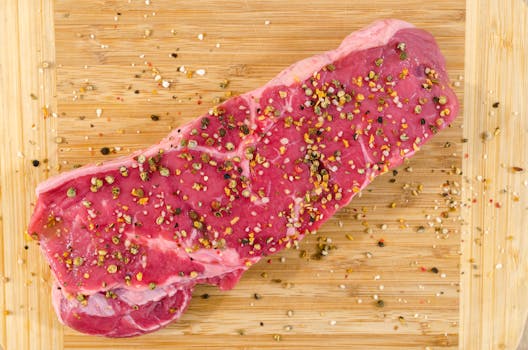 Photo: Lukas Blazek / Pexels